03 / CASE STUDY — POS & BUSINESS DASHBOARD

BIZ ENGINE POS.

A business management and point-of-sale interface designed to streamline stock inventory, restock workflows, operational logs, and revenue metrics visualization.

Project Biz Engine POS
Role Full-Stack Frontend & Dashboard UI
Technologies Next.js, React, JavaScript, Responsive CSS
Project Status Live Web Application

What the project is

Biz Engine POS is a web-based point-of-sale and business management dashboard engineered to solve core operational headaches for commercial ventures: stock tracking, restocking requests, transaction logging, and revenue clarity.

Retail managers and shop operators often struggle with fragmented record-keeping split between paper notebooks and unwieldy spreadsheets. Biz Engine POS consolidates these workflows into a unified, high-performance interface with dedicated operational modules.

What I built

I engineered the complete dashboard architecture, modular view routers, and data presentation surfaces:

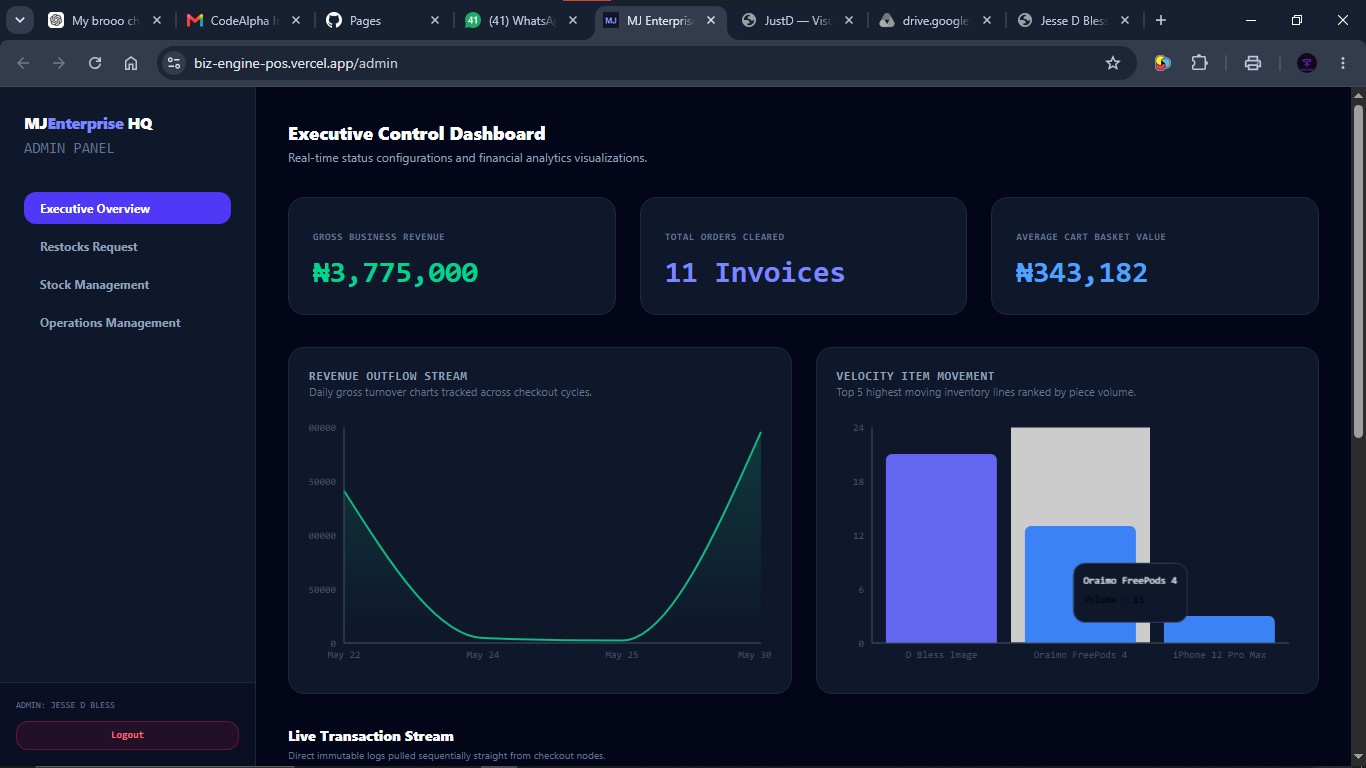
Executive Control Overview

Constructed a high-level command center displaying key operational metrics, active alerts, and immediate action items at a glance.

Stock & Inventory Management

Built comprehensive inventory catalog tables supporting SKU tracking, stock counts, low-quantity badges, and pricing updates.

Restock Requests Workflow

Implemented an order management module enabling operational staff to initiate, track, and approve restocking pipelines.

Daily Operations & Transaction Register

Created active register interfaces to record sales, view timestamps, and inspect transaction summaries without friction.

Revenue Analytics & Reporting

Integrated analytical visualization cards to track revenue trends, periodic sales aggregates, and financial performance.

Technical implementation

Next.js Application Architecture: Leveraging Next.js provides structured routing between dashboard views while maintaining client-side performance.

Component-Driven State Handling: Reusable React components power the data tables, search filters, and modal dialogues. State logic isolates active inventory modifications to prevent global layout re-rendering.

Responsive Dense Data Display: Commercial dashboards typically suffer when viewed on mobile devices. Custom responsive layouts allow desktop users to enjoy high data density while automatically transforming tables into readable stacked cards on smaller mobile viewports.

Challenges & engineering considerations

Data Density vs. Cognitive Load: Business software must balance information density with clean readability. Grouping items by operational stage (Executive, Restocks, Inventory, Operations, Revenue) helped keep screens focused on a single task at a time.

Fast Point-of-Sale Interactions: Checkout and stock updates must occur with minimal latency. Prioritizing client-side optimistic UI updates ensures the interface responds immediately to user actions.

Consistent Layout Rhythm: Navigating between diverse data views (e.g. from an inventory table to an analytics chart) was unified by standardizing card padding, typography scales, and border treatments.
What I learned

Building Biz Engine POS offered in-depth experience in architecting software for daily business operations. Unlike consumer websites where discovery and aesthetics take center stage, business tools require ergonomic workflows, clear error states, and immediate feedback.

The project deepened my expertise in designing clean dashboard navigation, managing complex relational states across inventory and sales logs, and deploying responsive web apps on Vercel.

Project links

The application is deployed live on Vercel and available to test in a browser: